How to Make Traditional Sundakkai Vatha Kuzhambu at Home
A step-by-step guide to making rich, authentic Sundakkai Vatha Kuzhambu with freshly ground spices and aromatic sesame oil.
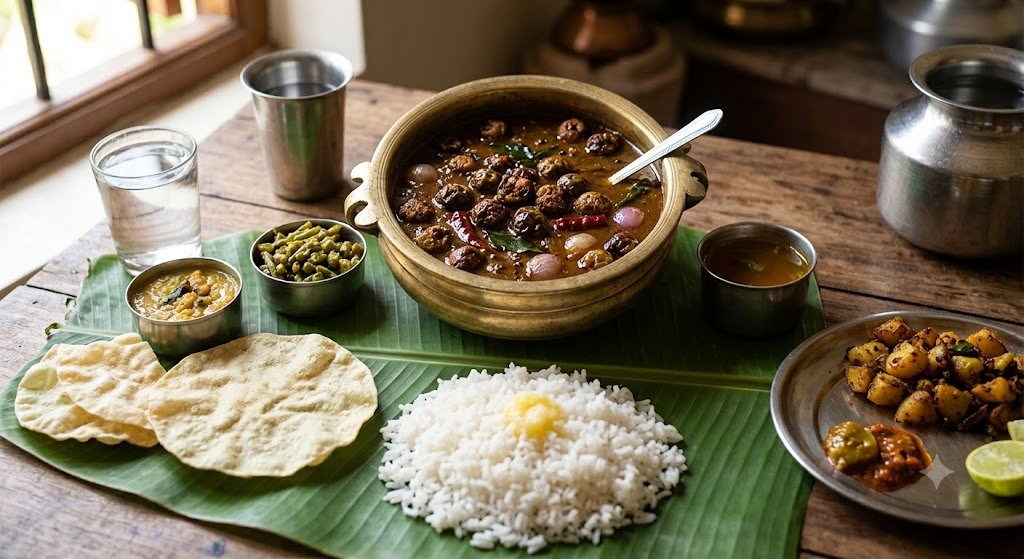
Sundakkai Vatha Kuzhambu holds a unique spot in Tamil home cooking. Unlike everyday sambar or light rasam, a well-made vatha kuzhambu delivers an intense, concentrated flavour driven by dark-roasted spices, tangy tamarind extract, and unrefined gingelly oil (nallennai).
Sundakkai, or sun-dried turkey berry, brings a subtle, pleasant bitterness that cuts through the thick, spicy gravy. Traditional kitchens also value sundakkai for its digestive benefits, making this dish both a comfort food and a digestive aid after heavy meals.
The Core Ingredients
The secret to a fragrant vatha kuzhambu lies in roasting whole spices fresh rather than relying entirely on pre-packaged powders. Using good-quality sesame oil is non-negotiable, as it balances the sharp heat and acid of the tamarind.
For the Freshly Ground Spice Paste:
- Chana dal (kadalai paruppu): 1 tablespoon
- Coriander seeds (dhaniya): 1.5 tablespoons
- Whole black peppercorns: 1 teaspoon
- Cumin seeds (jeeragam): 1/2 teaspoon
- Fenugreek seeds (vendhayam): 1/4 teaspoon
- Dried red chillies: 5 to 6 (adjust according to heat preference)
- Grated coconut: 2 tablespoons (optional, for body)
For the Kuzhambu Base:
- Sundakkai vathal: 2 tablespoons
- Tamarind: Lemon-sized ball, soaked in 2 cups of warm water
- Gingelly oil (sesame oil): 3 to 4 tablespoons
- Mustard seeds: 1 teaspoon
- Fenugreek seeds: 1/2 teaspoon (for tempering)
- Curry leaves: 2 sprigs
- Asafoetida (hing/perungayam): 1/2 teaspoon
- Small onions (shallots): 10 to 12, peeled (optional but recommended)
- Garlic cloves: 8 to 10 cloves, peeled
- Turmeric powder: 1/2 teaspoon
- Jaggery: 1 small piece (about 1 teaspoon, powdered)
- Salt: To taste
Step-by-Step Preparation
1. Extract the Tamarind Pulp
Soak the tamarind in two cups of warm water for roughly 15 minutes. Squeeze thoroughly to extract thick juice, strain out the solids, and set the tamarind water aside.
2. Roast and Grind the Masala
Heat a teaspoon of gingelly oil in a heavy-bottomed kadai over medium-low heat. Add the chana dal, coriander seeds, black peppercorns, cumin seeds, fenugreek seeds, and dried red chillies.
Roast the mixture patiently until the lentils turn golden brown and release a nutty aroma. Add the grated coconut right at the end and turn off the flame. Let the mixture cool completely, then grind it with a few splashes of water into a smooth, thick paste.
3. Fry the Sundakkai Vathal
In the same kadai, heat two tablespoons of gingelly oil over low flame. Add the sundakkai vathal and fry gently until they puff up slightly and turn crisp and dark brown. Do not let them burn, as burnt berries make the kuzhambu excessively bitter. Remove the fried vathal with a slotted spoon and set aside.
4. Build the Kuzhambu Base
In the remaining hot oil, add mustard seeds and let them crackle. Add the fenugreek seeds, asafoetida, and fresh curry leaves. Tip in the whole peeled shallots and garlic cloves, sautéing until the onions turn translucent and lightly browned at the edges.
Pour in the prepared tamarind water along with turmeric powder and salt. Bring the liquid to a rolling boil over medium heat and let it simmer for about 8 to 10 minutes until the raw smell of tamarind disappears.
5. Combine and Simmer
Add the ground spice paste to the boiling tamarind base, stirring well to ensure no lumps form. Lower the flame and allow the gravy to simmer gently. As it thickens, stir in the fried sundakkai vathal and the piece of jaggery.
Cook on low heat for another 6 to 8 minutes until the gravy turns glossy and droplets of gingelly oil begin to separate and float to the surface. Turn off the heat and drizzle a final teaspoon of raw gingelly oil over the top for aroma.
Tips for the Best Texture and Shelf Life
Vatha kuzhambu is one of those traditional dishes that tastes significantly better several hours after cooking. As the gravy rests, the sundakkai softens slightly and absorbs the tang of the tamarind, while the spices mellow and deepen.
Always use a heavy clay pot (man chatti) or cast-iron kadai if available, as these retain heat evenly and enhance the deep, rustic notes of the tamarind. Because of the generous amount of sesame oil and tamarind, this dish easily stays fresh at room temperature for two days and up to a week when refrigerated.
How to Serve
Serve hot, steaming ponni boiled rice or sona masoori rice with a generous ladle of sundakkai vatha kuzhambu and a drizzle of melted ghee or cold-pressed gingelly oil. It pairs naturally with mild vegetable sides such as cabbage kootu, snake gourd poriyal, or simple roasted appalam.