Making Traditional Ash Gourd Mor Kuzhambu Without Curdling
Master the gentle art of preparing spiced yogurt gravy with winter melon, fragrant coconut paste, and the right tempering technique.
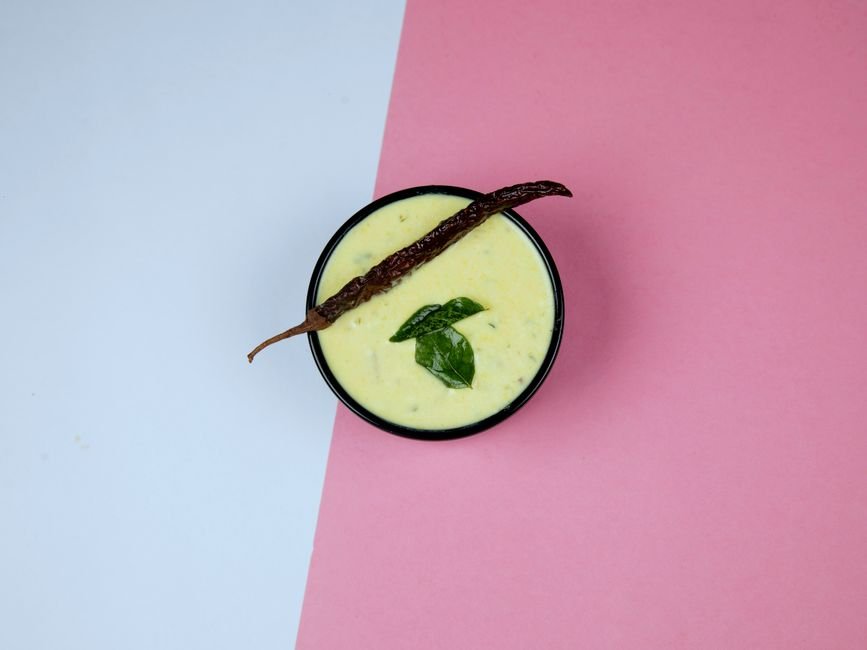
Few dishes hold as comforting a place on a Tamil lunch thali as Mor Kuzhambu. Mildly tangy, fragrant with fresh coconut, and gentle on the stomach, it provides an immediate contrast to the fiery tamarind-heavy gravies that dominate everyday cooking. While it appears deceptively simple, achieving that silky, pale-yellow broth requires understanding how yogurt behaves when exposed to direct heat.
The most common stumbling block in preparing this dish is curdling. When sour curd meets sudden, intense heat, the proteins seize and separate into watery liquid and grainy curds. With a balanced soaking paste and careful heat management, you can produce a velvet-textured Mor Kuzhambu every single time.
The Core Ingredients and Preparation
The foundation of Mor Kuzhambu rests on three elements: the vegetable, the spice paste, and the yogurt base. While you can make Mor Kuzhambu with lady’s finger (vendakkai), chow-chow, or fried vadai, ash gourd (ven poosani) remains the gold standard. Its mild flavour and high water content absorb the delicate spices without overpowering them.
For the ground paste, you need ingredients that both flavour the broth and stabilize the dairy. Freshly grated coconut provides body and natural sweetness, while green chillies supply subtle heat without colouring the gravy dark.
- Toor dal and raw rice: One tablespoon of each, soaked in warm water for twenty minutes. The starch from the rice and the protein from the lentils prevent the curd from splitting as it heats.
- Cumin seeds (jeeragam): One teaspoon, soaked along with the lentils to release aromatic oils when ground.
- Ginger: A small one-inch piece, peeled, to aid digestion and balance the rich coconut milk flavour.
- Green chillies: Three or four, depending on your preferred spice tolerance.
- Fresh coconut: Half a cup of freshly grated coconut meat.
Preparing the Yogurt Base
The condition of your curd determines the final taste of the dish. Store-bought fresh yogurt often lacks the necessary acidity, resulting in a bland dish. Ideally, use curd that is slightly sour, fermented overnight at room temperature. If your homemade batch is very tart, dilute it with a splash of fresh milk or water.
Whisk two cups of sour curd thoroughly before it goes anywhere near the stove. Lumps left in the cold curd will persist in the finished gravy. Blend the soaked dal, rice, cumin, ginger, chillies, and coconut into a completely smooth paste using minimal water, then stir this directly into the whisked curd along with half a teaspoon of turmeric powder and salt to taste.
Cooking the Ash Gourd Properly
Peel two hundred grams of ash gourd, discard the soft, seed-filled core, and dice the firm flesh into medium-sized cubes. Ash gourd releases substantial moisture as it cooks, so keep your cooking liquid minimal.
Place the gourd cubes in a heavy-bottomed vessel, add half a cup of water, a pinch of turmeric, and a little salt. Cover and simmer over medium heat for eight to ten minutes. The vegetable should turn translucent and yield easily to a fork while retaining its shape. Do not drain the remaining cooking water; let it cool slightly in the pan.
The Critical Simmering Stage
Once the vegetable has cooled down from a rolling boil, reduce the heat to the lowest possible setting. Pour the whisked curd and coconut paste mixture into the vessel containing the cooked ash gourd. Stir continuously in a gentle, rhythmic motion to blend the ingredients.
Watch the surface of the pan closely. Mor Kuzhambu must never reach a vigorous boil. As the mixture warms, small frothy bubbles will begin to rise around the rim of the pan, and the liquid will thicken slightly into a smooth, glossy sauce.
The moment you observe steam rising steadily and froth gathering in the centre, switch off the flame immediately. Leaving the pan on the stove for even an extra minute will cause the whey to separate, ruining the texture.
Tempering and Final Aromatics
The final tempering, or thalippu, elevates the subtle flavours of Mor Kuzhambu into something memorable. Coconut oil is non-negotiable here, as it complements the ground coconut base perfectly.
- Heat two teaspoons of virgin coconut oil in a small tadka pan over medium flame.
- Add half a teaspoon of mustard seeds and let them crackle completely.
- Add a quarter teaspoon of fenugreek seeds (vendhayam), taking care not to burn them.
- Toss in two dried red chillies, split in half, and a generous pinch of asafoetida (heeng).
- Finish with a handful of fresh curry leaves, letting them crisp up for five seconds.
Pour the sizzling oil and spices directly over the warm kuzhambu. Cover the pot with a tight-fitting lid and allow it to rest for at least ten minutes before serving. This trapping of steam infuses the entire dish with the aroma of roasted fenugreek and fresh curry leaves. Serve it warm alongside steaming ponni boiled rice, a spicy potato roast, or crisp roasted papadams.
Photo: Milton Das / Pexels